
Imagine waking up to a notification that your overseas office has been hit by a ransomware attack. Your primary operational environment is encrypted, and your local backup copies are completely compromised.
For many IT directors and Managed Service Providers (MSPs), this is the ultimate nightmare scenario. But for one company, it was merely a minor glitch. Why? Because they had an external, immutable S3 backup copy that allowed them to restore their entire environment with just a few clicks.
This scenario raises a fundamental question: In a digital-first economy, who genuinely controls your data?
💸The Ransomware Threat vs. The Egress Ransom
When we talk about data being held hostage, we immediately think of cybercriminals and extortion demands. But there is a second, far more pervasive form of ransom happening every single day in the cloud industry: Egress Fees and Vendor Lock-in.
Major public cloud hyper-scalers make it easy and inexpensive to push your data into their clouds (ingress). But the moment you attempt to access, migrate, or restore your data elsewhere, you are slapped with exorbitant data transfer charges (egress fees).
Nearly half of traditional hyper-scaler storage bills consist of these hidden API and transfer taxes rather than actual storage capacity. You shouldn’t have to pay a penalty to retrieve your own data.
The Cloud Sovereignty Dilemma: The Illusion of “European” Datacenters 🇪🇺 US
Most European businesses assume that if their data is stored on a server physically located in Frankfurt or Brussels for example, it is protected by European law.
This is a dangerous misconception.
- US CLOUD Act: Extraterritorial reach allows US authorities to compel American tech companies to provide access to data under their control, regardless of whether the servers are physically located in Europe or elsewhere.
- EU GDPR: Protects personal data within the European Union by setting strict compliance and privacy standards.
The Conflict: Even if data resides in a European data center, using a US-owned cloud provider exposes that data to foreign jurisdictional access under the CLOUD Act, creating a conflict with strict EU privacy regulations
FACT: More than 60% of the global cloud market is dominated by the top 3 American providers. Over 90% of data exchanged in Europe falls under extraterritorial legislation—such as the US CLOUD Act—giving foreign authorities theoretical legal access to your information, regardless of where the hardware resides.
Why Competitors Like Wasabi Fall Short on True Sovereignty
Many providers position themselves as low-cost alternatives. Take Wasabi, for instance: while they offer no egress fees and run datacenters within Europe, Wasabi is a US-incorporated entity. Even when deployed inside European datacenters, American-owned storage providers remain bound to foreign court orders and US jurisdictional reach under the CLOUD Act.
True data sovereignty requires more than local hardware; it requires local ownership, local management tools, and local legal jurisdiction.
🛡️The Modern Solution: Object Storage & Digital Air-Gapping
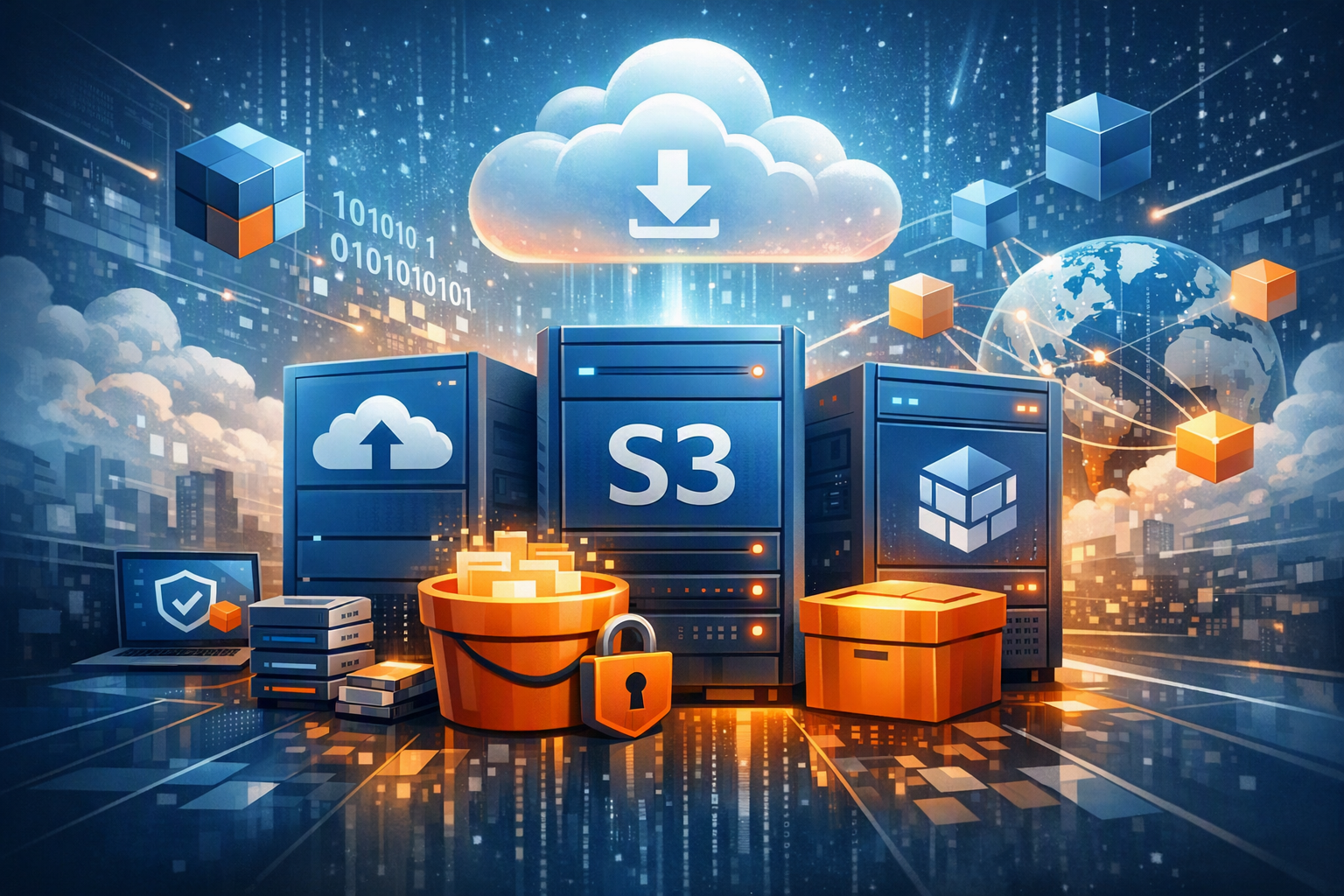
To defend your organisation against both cyber threats and sovereign liabilities, modern IT architectures rely on S3 Object Storage paired with S3 Object Lock.
Historically, an air gap meant physically removing a backup tape and locking it in a bank vault. S3 Object Lock provides the digital equivalent. When an immutable retention policy is applied, your backup objects are locked on write.
This guarantees an untouched, uncorrupted recovery point whenever disaster strikes!
🏰The Belgian Data Fortress: The Cubixion Model
At Cubixion, we built a storage architecture designed to eliminate black boxes, hidden fees, and jurisdictional risks.
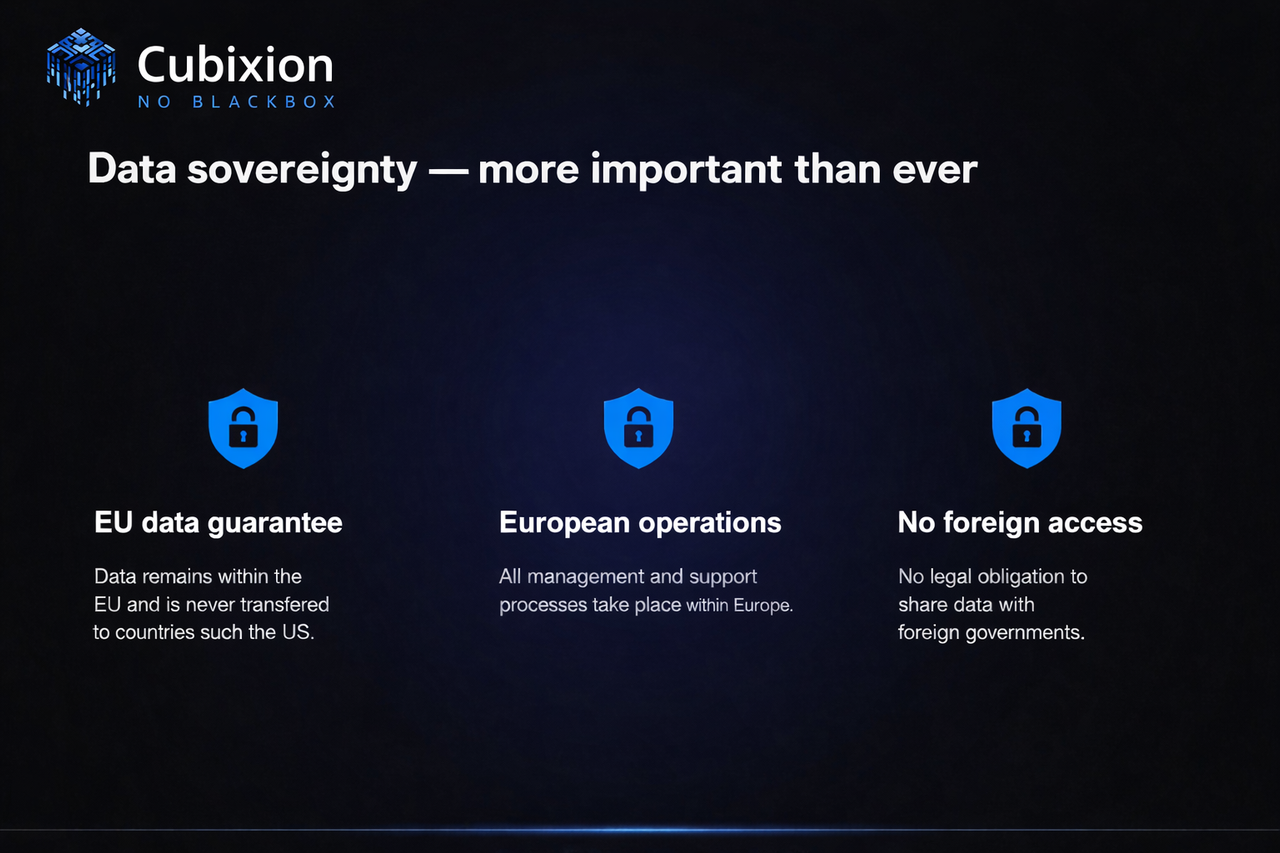
- 100% Belgian Ownership & Hosting: Your data is stored, managed, and backed up strictly within Tier III+ and Tier IV datacenters in Belgium. It remains fully subject to Belgian and EU laws (GDPR, NIS2) without exposure to foreign legislation.
- True End-to-End Sovereignty: Unlike competitors who host data in Europe but run their management consoles or parent companies out of foreign jurisdictions, our entire stack and management portal (my.cubixion.com) are hosted locally
- Zero Egress, Zero Ingress, Zero Hidden Fees: Move your data freely. Whether you are restoring backups, or migrating workloads, you pay a flat, predictable rate per TB with no surprise or API request charges
- No Black Box Architecture: Complete transparency. We support open S3 standards alongside native multi-protocol access (NFS, SMB/CIFS), integrating seamlessly with platforms like Veeam, Acronis, CommVault, Veritas, Nakivo and many others…
🤝Empowering Local IT Champions & MSPs
According to recent industry data from Accenture, over 80% of European enterprises have already invested in or are actively planning their move to sovereign cloud infrastructure.
This shift represents a massive strategic advantage for local Managed Service Providers (MSPs) and System Integrators. Partnering with a true local sovereign provider allows MSPs to:
- Offer High-Margin Data Protection: Deliver enterprise-grade “data insurance” against ransomware without risking client churn over unpredictable hyper-scaler bills[cite: 3, 4].
- Guarantee Total Compliance: Provide customers with absolute certainty regarding data residency, audit trails, and legal protections.
- Build Real Human Relationships: Access direct technical support from local experts in your time zone speaking your language.
Final Question for Your IT Strategy
In a digital landscape filled with cyber threats, volatile price hikes, and foreign legal overreach, ask yourself:
Who actually holds the keys to your enterprise data? A foreign hyper-scaler, an overseas software vendor, or your own team under local legal protection?
Take back control of your cloud storage. Discover the Cubixion Belgian Sovereign Storage Platform